
New Concrete Driveways Built to Last in Sacramento, CA
Why Sacramento Homeowners Call Us First
- We Know Sacramento's Soil: We've worked in this area for years. We know exactly what the clay soil here does to a driveway that wasn't built right. Every job we do accounts for that from the start.
- We Pull the Right Permits: We handle all permits with the City of Sacramento and Sacramento County. You don't have to make a single phone call or wait in line at any office. We take care of it.
- No Subcontractors Our Crew Does the Work: The team that shows up is the team we trained. We don't hand your job off to someone else. That means the quality stays consistent from the first shovel to the final seal.
- We Use Commercial-Grade Materials on Residential Jobs: We don't cut corners on materials to save money. We use the same concrete mixes, rebar grades, and sealers that commercial contractors use on parking structures and loading docks.
- We Back Our Work in Writing: Every driveway we pour comes with a written workmanship warranty. If something goes wrong because of how we built it, we come back and fix it with no argument, no fee.
- Free Estimates, No Pressure:We come to your property, look at the job, and give you a clear number in writing. There's no obligation to book and no time limit on the quote.
What We Build for Sacramento Homeowners
Full Tear-Out and Driveway Replacement
Sometimes a driveway is too far gone to fix. Cracks, sinking slabs, or major root damage are signs it's time to start over. We remove the old concrete from top to bottom. Next, we cut the old surface clean using a walk-behind concrete saw with a diamond-segmented blade. This keeps the edges straight and protects your sidewalk or curb. After the old concrete is gone, we build the ground back up with a 6-inch layer of Class II Aggregate Base crushed rock that won't shift under the weight of your car. This full demolition process follows Sacramento City Code Section 15.20.080, which covers demolition disposal permits and site cleanup.
Concrete Driveway Installation for New Homes
Building a new home or starting with an empty lot? We design and pour a concrete driveway that fits your property from day one. We use a 4,000 PSI concrete mix with fiber mesh reinforcement, which is stronger than standard mixes and holds up under daily traffic. After it cures, we test the slab with a rebound hammer hardness tester to confirm it hit the right strength level. This step follows CBC Section 1908, which sets the rules for concrete strength testing before vehicles are allowed on the surface.
Extra Parking Space and RV Pads
Need room for a boat, trailer, or RV? We can widen your current driveway or pour a separate parking pad next to it. The new concrete ties directly into the old slab using steel connectors called dowels. Inside the pad, we tie together a tight grid of #4 steel rebar with epoxy-coated tie wire using a cordless automatic rebar tying tool. This keeps the grid exactly in place during the pour so the rebar ends up in the center of the slab, where it does the most good. The pad size and position meet Sacramento County Zoning Code Section 3.1.2, which sets the setback rules for accessory parking on residential lots.
Driveway Aprons and Curb Cuts
The apron is the short section of concrete between the street and your private driveway. It takes a beating every single day from car tires, water runoff, and street traffic. We pour aprons using a City of Sacramento Standard Type A driveway transition concrete mix, which is made to hold up under that kind of stress. We also measure the slope using an ADA-compliant digital smart level to make sure the angle is right, not too steep to scrape your car, and not flat enough to trap water. This work is permitted under Sacramento City Code Section 12.08.040, which governs driveway encroachment on public right-of-way.
Fixing Driveways That Already Have Problems
Sealing Cracks Before They Get Worse
Small cracks in a driveway are worth fixing right away. Water gets in through cracks and washes away the soil underneath. Once that soil is gone, the concrete above sinks and breaks apart faster. We start by widening each crack with a pneumatic crack-chasing router so the walls are clean and even this helps the sealant grip better. Then we fill the crack with a two-part polyurea joint sealant that stays flexible so it moves with the concrete during temperature changes. This repair method follows ASTM C920, the national standard for elastomeric joint sealants.
Lifting Sunken Slabs Without Tearing Them Out
When a section of your driveway drops lower than the rest, it creates a lip that's easy to trip over. The good news is that you don't always need to replace it. We can lift it back up using a process called polyjacking. We drill small holes in the sunken slab. Then we use a dual-component polyurethane metering pump to push hydrophobic geopolymeric lifting foam underneath. The foam expands and gently raises the slab back to the right level. This foam is safe around soil and groundwater. It meets California Department of Water Resources standards for groundwater safety, so you don't have to worry about chemicals soaking into the ground.
Replacing Old, Rotted Expansion Joints
Expansion joints are the small gaps between concrete slabs. They let the slabs move a little without crashing into each other. The old joints are often made of wood, and wood rots over time. When that happens, the gap fills with dirt and rocks, and the slabs start to grind against each other. We clear out the old material using a pneumatic joint-clearing chisel that doesn't damage the concrete edges. Next, we press a closed-cell polyethylene backer rod into the joint to set the right depth. Then we seal the top with a flexible sealant. This setup meets Sacramento County Building Code Section 16.04, which covers structural expansion clearances for flatwork.
Sealing the Surface to Block Stains and Damage
Oil drips, tire marks, and Sacramento's intense UV rays all break down concrete over time. Sealing your driveway is the easiest way to stop that damage. We apply the sealer using a heavy-duty low-pressure chemical pump sprayer that puts down an even coat across the whole surface. The product we use is a penetrating silane-siloxane sealer. It soaks into the concrete and reacts chemically with it, so it can't peel off the top. This sealer is certified to meet SCAQMD Rule 1113 VOC limits for concrete sealers, as adopted by the Sacramento Metropolitan Air Quality Management District.
How We Get It Done, Start to Finish

We Walk the Property First
Before any digging starts, we visit your property and take a close look at the site. We check the soil, the slope, any tree roots nearby, and how water currently drains. We also call 811 to have all underground utility lines marked so we don't accidentally dig into anything important.

Digging Out and Building a Solid Base
We dig down to the right depth and remove weak or loose soil. Next, we bring in crushed rock Class II aggregate and compact it in layers until it reaches 95% density. This base is what keeps your driveway from sinking or cracking down the road.
Setting the Forms and the Rebar
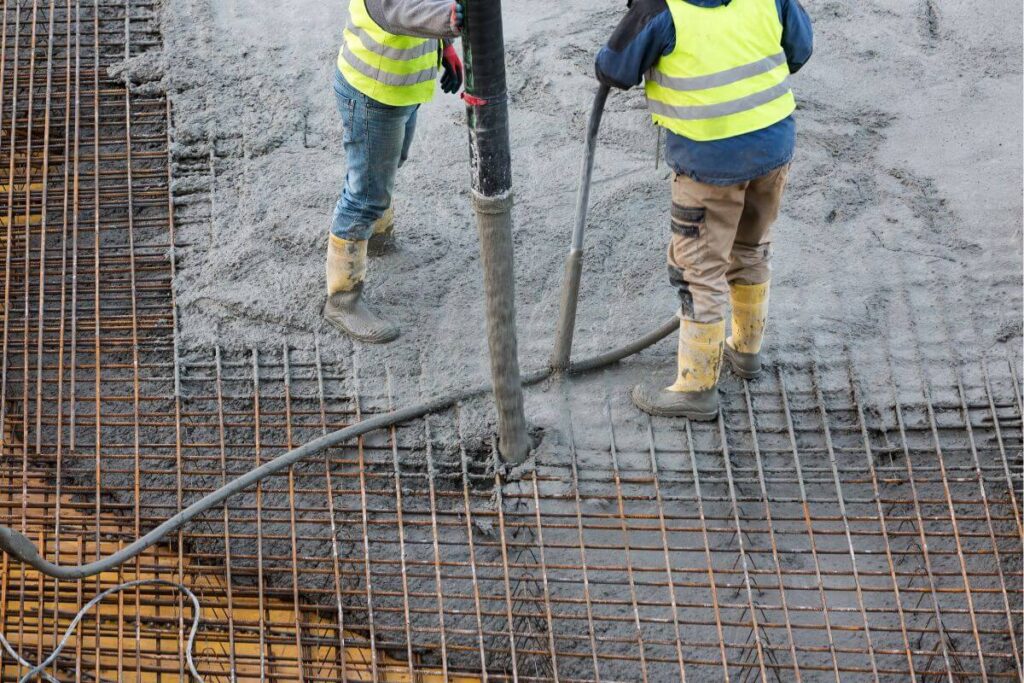
We build wooden frames around the area to hold the concrete in the right shape while it sets. Inside those frames, we lay a grid of steel rebar and prop it up on small concrete blocks. This puts the steel right in the middle of the slab exactly where it provides the most strength.

Pouring and Finishing the Concrete
The concrete truck pulls up and we pour the mix directly into the forms. We spread it evenly and work out any air pockets. After that, our crew smooths the surface and applies your chosen finish to a simple broom texture, a stamped stone pattern, or an exposed pebble surface.

Cutting Joints and
Letting It Cure
Once the pour is done, we cut straight lines called control joints across the slab. These lines guide any natural shrinkage cracks to a spot where they won't show. Then we apply a curing product or wet blanket to keep the concrete from drying out too fast.